THE LAB

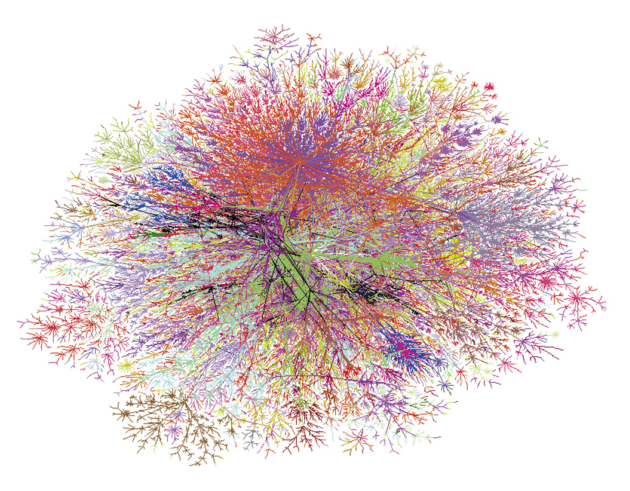
CCNR/The Lab: The Center for Complex Network Research (CCNR), directed by Professor Albert-László Barabási, has a simple objective: think networks. The center's research focuses on how networks emerge, what they look like, and how they evolve; and how networks impact on understanding of complex systems. To understand networks, CCNR's research has developed to rather unexpected areas. Certain studies include the topology of the www - showing that webpages are on average 19 clicks form each other; complex cellular network inside the cell-looking at both metabolic and genetic networks; the Internet's Achilles' Heel. The center's researchers have even ventured to study how actors are connected in Hollywood.

TEAM

DIRECTOR

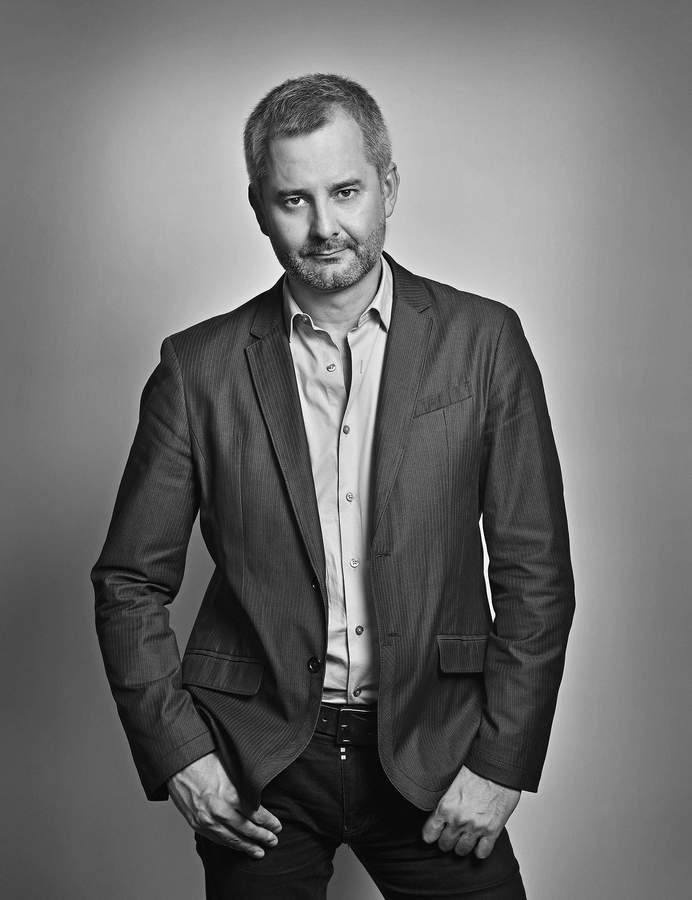
Albert-László Barabási

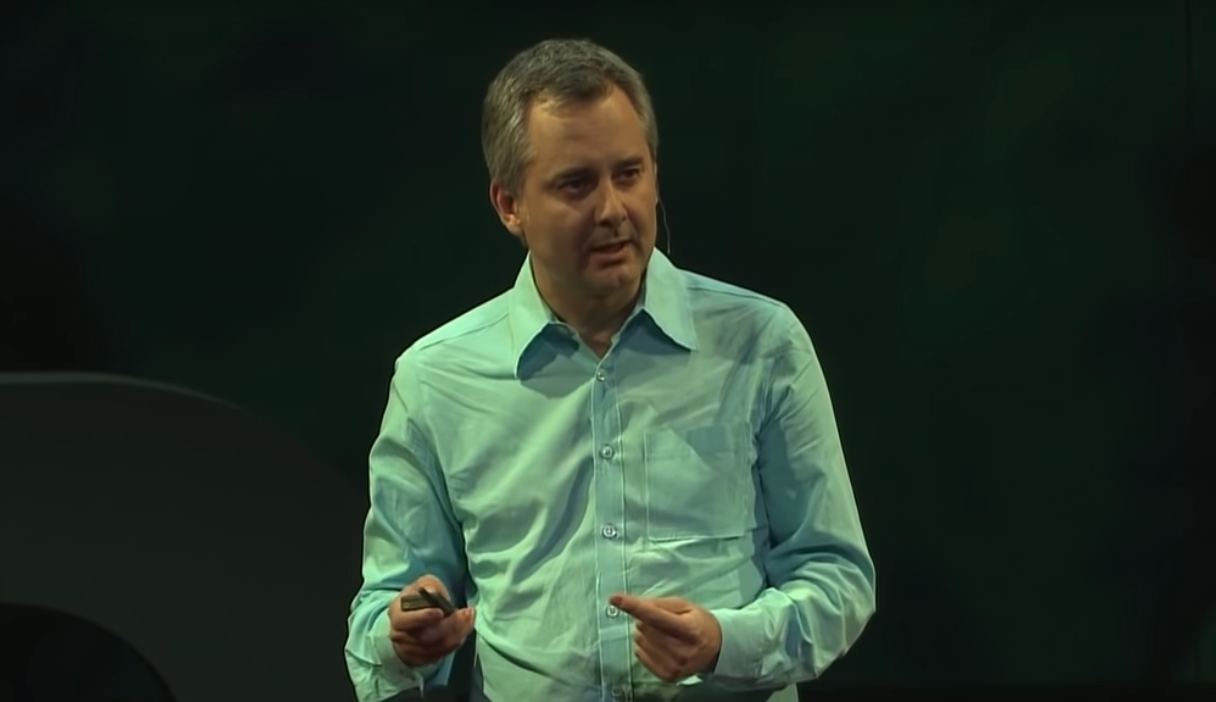
Albert-László Barabási is a network scientist, fascinated with a wide range of topics, from unveiling the structure of the brain to treating diseases using network medicine, from the emergence of success in art to how does science really works. His work has helped unveil the hidden order behind various complex systems using the quantitative tools of network science, a research field that he pioneered, and lead to the discovery of scale-free networks, helping explain the emergence of many natural, technological and social networks.

Albert-László Barabási spends most of his time in Boston, where he is a Distinguished University Professor of Network Science at Northeastern University, and holds an appointment in the Department of Medicine at Harvard Medical School. But he splits his time with Budapest, where he runs an European Research Council project at Central European University. A Hungarian born native of Transylvania, Romania, he received his Masters in Theoretical Physics at the Eötvös University in Budapest, Hungary and Ph.D. three years later at Boston University.

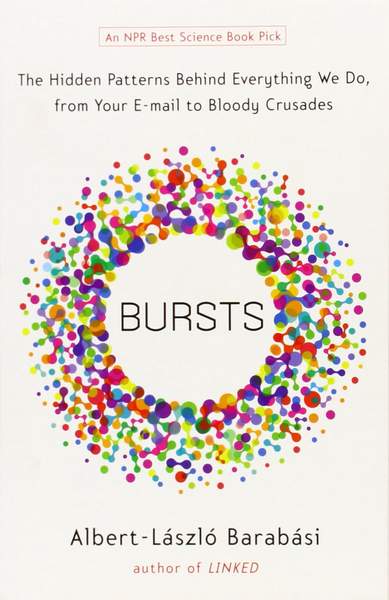
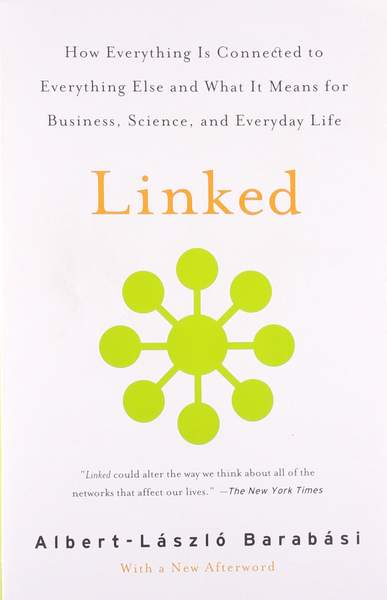
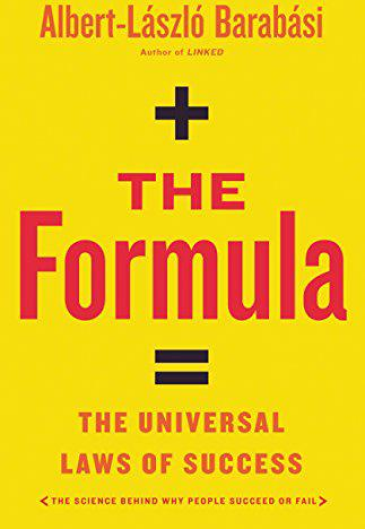
Barabási’s latest book is The Formula (Little Brown, 2018). He is the author of “Network Science” (Cambridge, 2016). "Linked" (Penguin, 2002), and "Bursts:" (Dutton, 2010) He co-edited Network Medicine (Harvard, 2017) and "The Structure and Dynamics of Networks" (Princeton, 2005). His books have been translated in over twenty languages.
BOOKS

VIDEOS

Bursts

The Authors@Google program welcomed Albert-László Barabási to Google's New York office to discuss his book, "BURSTS: The Hidden Pattern Behind Everything We Do"

Spectrum: BURSTS; Episode 1: From randomness to bursts (2015, in English)

A four part documentary based on Bursts, hosted by Sankha Guha.

Spectrum: BURSTS; Episode 3: You are Predictable (2015, in English)

A four part documentary based on Bursts, hosted by Sankha Guha.

Network Medicine@ TEDMED (2012)

Networks guru and author Albert-László Barabási says diseases are the results of system breakdowns within the body, and mapping intracellular protein networks will help us discover cures.

Connected: The Power of Six Degrees

(alternate title: How Kevin Bacon Cured Cancer) is a 2008 documentary film by Annamaria Talas. It was first aired in 2009 on the Science Channel. The documentary introduces the audience to the main ideas of network science through the exploration of the concept of six degrees of separation. Stars: Nyaloka Auma, Kevin Bacon, Albert-László Barabási

Networks are everywhere

According to Carl Sagan, the beauty of a living thing is not the atoms that go into it, but the way those atoms are put together. In our cells, atoms compose a multitude of molecules such as proteins and DNA, which coexist in a complex, mutually dependent network. Similarly, our cells themselves exist in an interdependent network of organs and nerves, and our very consciousness is thought to arise from the complex network of billions of neurons, connected by trillions of synapses. Networks are everywhere.

Q&A

Networks, Visualizations, and the Breaking of Scientific Boundaries

Albert-László Barabási in Conversation with András Szántó

Diversity can only be understood from the perspective of universality. You’re diverse in comparison to what? Universality is the unavoidable reference frame if you want to talk about diversity.

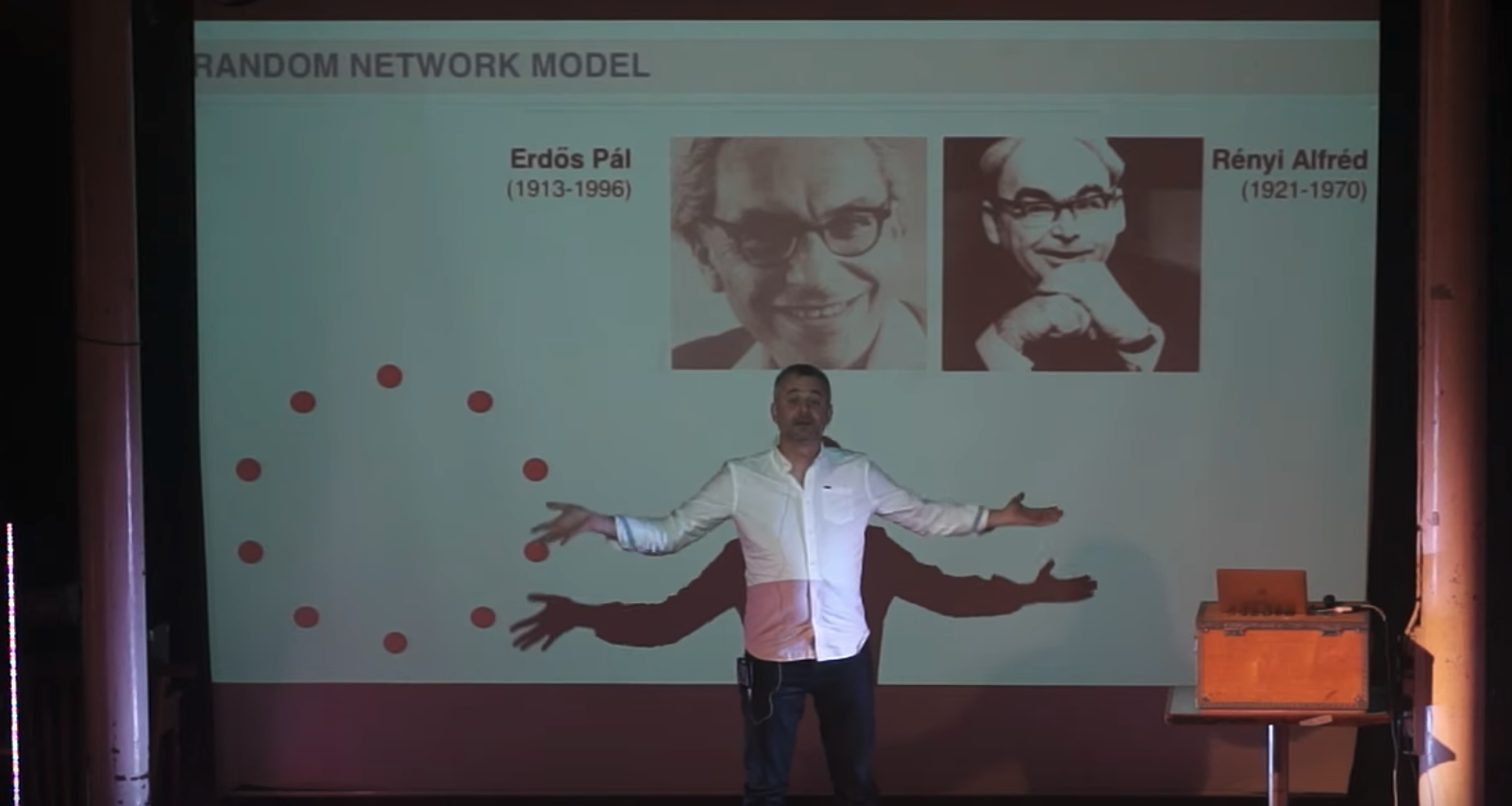
The I’ll give you an example from physics: hundreds of years ago, people believed there were different gods responsible for tides and waves on the seas, for the movement of the stars, and for why we fall down if we don’t pay attention. Then Newton came along and showed that all these phenomena have a single explanation: gravity. Once that was understood, it was possible to start exploring diversity, capturing the many different ways gravity manifests itself.

Similarly, we cannot truly understand diversity and differences until we first understand what is universal about the human existence and experience. This is not to say there is no value to thinking about diversity—that is what I do every day. But these countless independent choices and actions do add up to something larger than you and me. Which is why we must view diversity in the light of universality.

Was there something you got from your immersion in art that helped to push or catalyze your thinking?

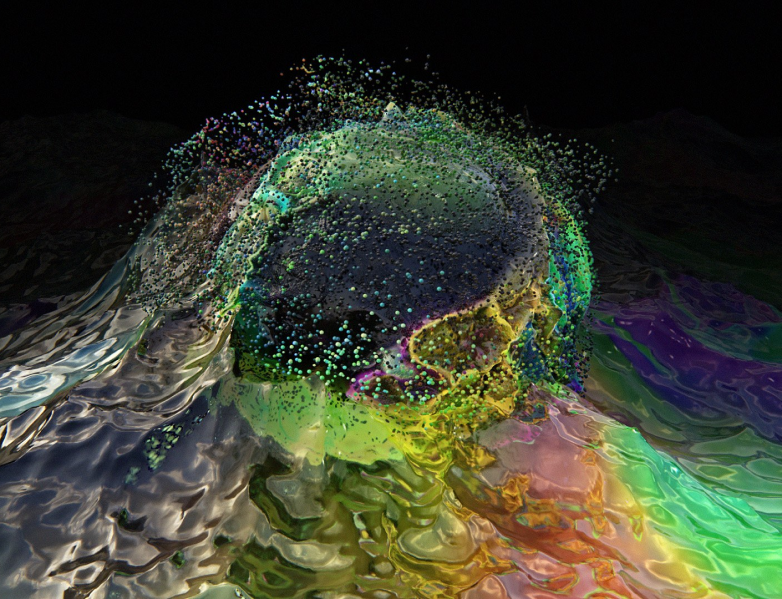
For me, the most inspiring thing about art is the fact that artistic expression lacks boundaries. It is willing to freely experiment with different media and technologies, and it possesses an unrestrained freedom to mix and utilize ideas. As soon as we started to study networks, I began appropriating concepts from the art world—not only to visualize networks, but also to think about them.

The story inside the art world in recent decades has been about breaking down universality, in search of a more diverse, de-centered art discourse. There is much anxiety about universal laws in the humanities. You are arguing that behind the multitude of everyday occurrences, universal laws are alive and well.

Our biological and physical existence depends on networks. Cells are networks of genes and molecules, and life as we know it is a result of interactions between them. Our consciousness is the result of the network of interactions of the billion or so neurons in our brain. We communicate via networks: through telephone, email, and social networks. And our economy is a giant network of buyers and sellers, economic transactions connecting a vast layer of actors.

Can you give me a capsule summary—a kind of elevator pitch—about the core ideas driving network science?

Our biological and physical existence depends on networks. Cells are networks of genes and molecules, and life as we know it is a result of interactions between them. Our consciousness is the result of the network of interactions of the billion or so neurons in our brain. We communicate via networks: through telephone, email, and social networks. And our economy is a giant network of buyers and sellers, economic transactions connecting a vast layer of actors.

The twenty-first century is the century of networks. To be sure, some of these networks were in existence for over a billion years. Many, however, came about in the twentieth- and twenty-first centuries. And it was only in this century that we have truly come to understand the fundamental importance of connectedness—the way in which networks shape our lives. The science of networks has emerged as a response to this understanding.

Researchers

Rodrigo Dorantes Gilardi

Associate Research Scientist

+INFO

Ting-Ting Gao

Postdoctoral Research Associate

+INFO

Bnaya Gross

Postdoctoral Research Associate

Anne Kavalerchik

Postdoctoral Research Associate

Michael Sebek

Associate Research Scientist

Visiting Scientists & Professors

Lucía Prieto Santamaría

Assistant Professor | Universidad Politécnica de Madrid

+INFO

Staff

Anya Marrufo-Zubaran

Administrative Operations Manager

Peter Ruppert

Entrepreneur in residence

James Stanfill

Senior Grants and Operations Manager

Students

Csaba Both

PhD Student

+INFO

Joseph Ehlert

PhD Student

+INFO

Cory Glover

PhD Student

+INFO

Garo Kerdelian

PhD Student

Yixuan Liu

PhD Student

Jonah Spector

PhD Student

Design Team

Csaba Both

PhD Student

+INFO

Jacopo Conti

Research Assistant

+INFO

Tina Rosado

Data Visualization Specialist

+INFO

LAB ALUMNI

Reka Albert
Kim Albrecht
Amal Al-Hussieni
Suzanne Aleva
Eivind Almaas
Mohammad Ameli
Yong-Yeol Ahn
Sebastian Ahnert
Joaquim Aguirre Plans
Yasamin Khorramzadeh
Jose Brum
Nicholas Blumm
Juliet Blanco
James Bagrow
Baruch Barzel
Enzo Battistella
Jose Gama Oliveira
Ayan Chatterjee
Wei Chen
Feixiong Cheng
Liping Chi
Brett Common
Sean P. Cornelius
Michele Coscia
Pedro M. Cruz
Michael M. Danziger
Marcio De Menezes
Joseph De Nicolo
Christian De Frondeville
Nima Dehmami
Pierre Deville
Zoltan Dezso
Italo Do Valle
Isaac Donnelly
Joshua Erndt-Marino
Abel Elekes
Jody Fisher
Zalan Forro
Jianxi Gao
Liang Gao
Gourab Ghoshal
Trevor Gillespy
Emre Guney
Philipp Havel
Junming Huang
Tao Jia
Qing Jin
Kimmo Kaski
Janos Kertesz
Maksim Kitsak
Daria Koshkina
Istvan Kovacs
Yifang Ma
Makim Makeev
Mauro Martino
Andrew McCallum
Ronaldo Menezes
Xiangyi Meng
Giulia Menichetti
Nikolett Mihaly
Soodabeh Milanlouei
Sarah Morrison
Deisy Morselli Gysi
Dakota Murray
Farzaneh Nasirian
Shany Ofaim
Rezsabet Ravasz
Babak Ravandi
Rasoul R. Rajaei
Maria Elena Renda
Benjamin Piazza
Marton Posfai
Zehui Qu
Sebastian Ruf
Rogini Runghen
Hillel Sanhedrai
Maximilian Schich
Vedran Sekara
Amitabh Sharma
Louis Shekhtman
Chaoming Song
Michael Tashman
Michelle Toups
Emma Towlson
Georgios Tsekenis
Kishore Vasan
Alexei Vazquez
Onur Varol
Pu Wang
Dashun Wang
Ursula Widocki
Stefan Wuchty
Gang Yan
Ki-Bong Yoo
Soon-Hyung Yook
Burcu Yucesoy
Khaled Saifuddin
Zuezhong Zhou
Han Zhuang
Jessica Louie
Yanchen Liu
Aming Li
Jie Li
Chen Bingsheng
Eivind Almaas
Philipp Havel


JOBS

PRESS